Government Schemes
Government of India has decided to withdraw the new income tax slabs
The Income Tax Bill 2025 has been withdrawn by the Center in anticipation of a more straightforward and equitable version being introduced on August 11. It is anticipated that the updated draft will increase rebates, relax TDS refund regulations, and make tax laws easier to understand for private citizens, small businesses, and charity trusts.

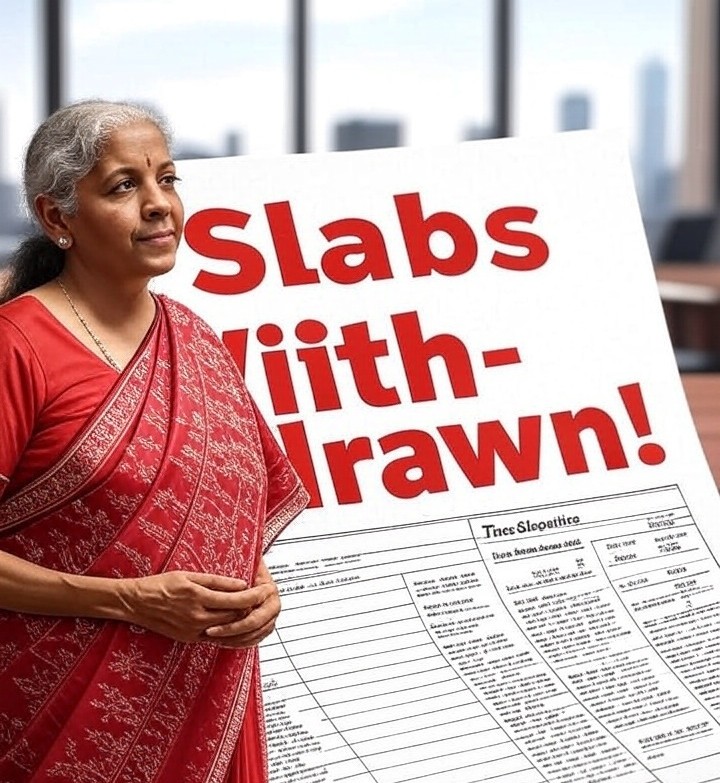
Today’s big news from Parliament is that the Central Government has officially withdrawn the Income Tax Bill, 2025, which was introduced in the Lok Sabha back in February this year. The move has caught a lot of attention because the bill was seen as a major step toward simplifying India’s complicated tax system.
I’ve been following this development closely, and here’s a detailed, straightforward breakdown of what has happened, why it happened, and what it could mean for all of us.
What Was the Income Tax Bill 2025?
The Income Tax Bill 2025, aimed at completely replacing the old Act, was introduced and passed in the Lok Sabha on February 1. These were as follows:
- Up to ₹4 lakh: 0% (Nil)
- ₹4 lakh to ₹8 lakh: 5%
- ₹8 lakh to ₹12 lakh: 10%
- ₹12 lakh to ₹16 lakh: 15%
- ₹16 lakh to ₹20 lakh: 20%
- ₹20 lakh to ₹24 lakh: 25%
Above ₹24 lakh: 30%
Why Was It Withdrawn?
The government initially received a good response to the bill. But when it was sent to a select committee of Parliament for review, a lot of suggestions and feedback came in—a total of 32 detailed recommendations.
Also read Union Budget 2025: Tax Slabs, Middle-Class Relief
The committee has pointed out that some provisions need more clarity. This included rules for corporate taxation and even processes like TDS refunds. If these changes are made after the bill is passed, it may lead to confusion.
So, maybe instead of rushing through it, the government decided to take a step back. By withdrawing the bill now, they can make all the necessary corrections.
In my opinion, maybe there is a desire to improve it further, and it will be good news for the people, and it shows a desire to improve and correct.
Why This Move Matters
Laws have been swiftly passed in the past but have since required numerous revisions. Confusion, court cases, and lost time for the government and taxpayers result from that.
It’s also important to remember that streamlining tax legislation has two benefits: it increases compliance and makes life easier for people. Simplified laws encourage more people to file accurately and on time, which eventually boosts government revenue without boosting tax rates.
When Will the New Version Be Out?
Nirmala Sitharaman has said in Parliament that the new bill will be introduced in the Lok Sabha on 11 August 2025.
And in this amendment, all the angles will be kept in mind, keeping in mind all the important interests and then keeping in mind the concerns of industry bodies and common taxpayers.
Possible Changes in the New Draft
According to the information I have gathered, there may be some changes in the upcoming version:
Greater Tax Relief for the Middle Class
- The rebate available under the Section 87A could be revised. Currently, it is available for people earning up to ₹7 lakh. It seems the new draft has the potential to increase this to ₹12 lakh.
- The maximum rebate that can be claimed is set to increase from 25,000 to 60,000.
Easier Offenses for Honest Errors
- Filing returns can lead to unintentional mistakes, but in the event that there is an honest error, there could be no heavy sanctions. This increases voluntarism as opposed to compliance out of fear for excessive penalties.
The law could be clearer for how trusts are administered.
- Identified and anonymous donations to trusts that aid in proper governance, elimination of abuse, and conflicts.
Easier Ways of Claiming Tax Refunds
Taxpayers as individuals might be granted an extension in time prior to the deadline, thus allowing for the claiming of unfilled refunds.
Implications of the Above for Us
Taxpayers could benefit from the following:
Increased rebate and thus savings for individuals
Reduced penalties and less paperwork for genuine mistakes
Legislation that is is more straightforward and easier to understand for non-lawyers.
Increased rebate limits mean greater savings available.
Less restrictive laws can lead to easier compliance for small businesses and MSMEs, thus allowing for better allocation of resources and time.
The Road Ahead
More information will be available when the amended bill is introduced on August 11. There is no denying that this is a pivotal point in India’s tax reform process. This rule might be a landmark if it is implemented successfully, making taxes simpler, more equitable, and less frightening.
In the meanwhile, it’s important to monitor:
- if the administration fulfills its pledge to use clearer language.
- The actual amount of relief that middle-class taxpayers receive.
- whether or not compliance actually becomes less cumbersome.
Final Thoughts
Although the Income Tax Bill, 2025’s withdrawal, may initially seem like a setback, I regard it as a move in the right direction. This is a chance to make corrections before they are made available to more than a billion people; it is a halt, not a stop. The government’s ability to change direction is demonstrated by the withdrawal of the Income-Tax Bill, 2025.
The updated version might be among the biggest changes to India’s financial system in decades if it really does deliver on simplicity, equity, and clarity.
At this point, everyone is waiting until August 11 to see what adjustments have been made and whether they meet the expectations of experts, businesses, and taxpayers.


Pitru Paksha 2025: Honoring Ancestors and the Significance of Gaya Ji Mela

Maruti Suzuki Victoris Launch 2025 – Big Bet in the SUV Market


