Politics
Bharat Bandh on 9 July 2025: A Nationwide Protest Strike and Its Impact on Services
The Bharat Bandh 2025 on 9 July will disrupt metro and bus services across India. Expect delays, roadblocks, and closures as workers protest. Stay informed with travel tips and updates.

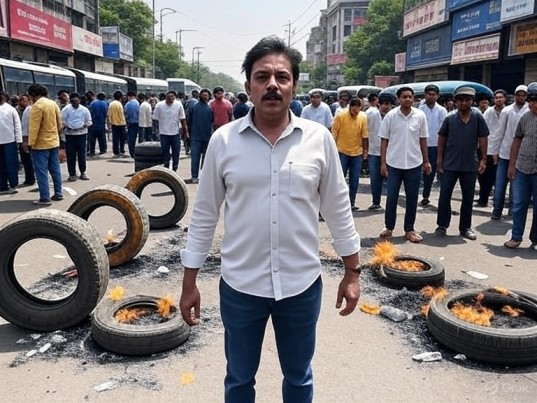
it is organized as a labor strike against what are perceived to be anti-worker and anti-peasant policies. It is spearheaded by a coalition of ten central trade unions, and countless farmer organizations and associations of rural laborers have lent their support. The strike is intended to paralyze the formal and informal economies of the country in their entirety. Organizers estimate participation from over 250 million workers, which will severely disrupt transportation, factory operations, and commerce in both urban and rural areas. As published here, this article for WDC News provides a summary of the strike’s main grievances, predicts significant disruptions in particular sectors, and outlines which services are expected to operate or suspend activities on that date.
Why the Bharat Bandh?
The all-India shutdown stems from protests by farmers’ associations and unions, which perceive the government’s approach as shifting away from supporting the working population towards largely pro-corporate policies. Central to the protests is the set of four labor codes that Parliament adopted and critics claim, to varying degrees, withdraws criminal sanctions for a number of employer abuses, reduces the scope for collective bargaining, increases the length of the workday, and weakens the power of trade unions. In addition, more than twenty-seven lakh workers from the power sector are opposing plans to privatize two large distribution companies in Uttar Pradesh because they view this as a step that endangers public service and their employment opportunities. Separately, the INDIA coalition is spearheading a Bihar bandh in opposition to the drastic modification to a voter register, which, in their estimation, will disenfranchise about one-fifth of voters, primarily from underrepresented groups. The Samyukta Kisan Morcha and a number of farm organizations, together with nearly all of the major national trade union federations—INTUC, AITUC, CITU, HMS, AIUTUC, SEWA, TUCC, LPF, AICCTU, and UTUC—have rallied under this varied set of demands.

According to the organizers, the number of participants exceeded twenty-five crore workers, demonstrating the extent of dissatisfaction felt across the nation. Harbhajan Singh Sidhu from the HMS (Hind Mazdoor Sabha) claims the strike will have widespread support from the public and private sectors, highlighting an unprecedented collective stand from urban industrial centers and rural populations. Earlier, on November 26, 2020, March 28-29, 2022, and February 16, 2024, there were already significant turnouts for these nationwide strikes, and HMS leaders are optimistic that this Bandh will see similar participation numbers as well.
Services That May Be Impacted
The scheduled Bharat Bandh is expected to impact a plethora of services in areas with a well-established union presence. The summary below captures the important areas that are expected to observe significant impacts:
- Banking Services: The All India Bank Employees Association (AIBEA), along with other bank trade unions, has declared that they will participate in the strike, which means daily banking will take a hit. Many branches of public and cooperative sector banks may remain closed or operate at bare minimum staffing levels, even in the absence of a formal national shutdown order from the Reserve Bank of India. Customers should brace themselves for longer wait times in cash withdrawal, check clearing, and basic account balance inquiries. In protest-heavy regions, those basic services may approach a standstill. For urgent requirements, internet banking and ATM services would be the optimum options.
- Postal Services: Union support for the bandh affects postal workers, so letter delivery and counter services at post offices are predicted to cease or slow in many regions of the country. Both companies and individuals who depend on timely letters, bills, or packages should prepare for severe interruptions. Everything from routine mail to express parcels may be suspended due to the backlog.
- Public Transportation: In major cities and areas with a strong union presence, buses, taxis, and app-based ride-hailing services like Ola and Uber are likely to face interruptions. Blockades and protest marches could disrupt routes coming into and out of those areas, resulting in delays, changed routes, and increased congestion. While state-run transport services, such as the Tamil Nadu State Transport Corporation (TNSTC), have not issued a formal order of shutdown, the turnout from their own drivers and conductors may result in a temporary service suspension in some neighborhoods. Such disruptions are expected to be particularly bad in Bihar, where the INDIA Bloc concurrent Bandh is expected to draw considerable participation.
- The Power Industry: The involvement of more than 27 lakh workers in the power sector might result in some areas experiencing local outages. This strike arises primarily from opposition to plans for privatizing the generation and distribution assets, with both rural and urban consumers likely to feel the impact. Supply to the hospitals, water facilities, and critical industries will likely be prioritized along with other important institutions. Therefore, low-level brownouts that rotate across non-essential users will likely be the initial control measure.
- Industrial and Coal Mining: UCIL and other coal and steel industry workers have confirmed participation alongside employees from the National Mineral Development Corporation. As a result, some factories in Tamil Nadu, Bihar, and Uttar Pradesh are likely to halt operations given the strong union presence across those regions.
- Construction and Roads: Workers from construction unions have also joined in, halting progress on highways and city buildings alike. The first to suffer will be daily wage laborers, while ongoing contracts may end up stalled for weeks to months due to waiting for workforce regrouping following the initial phase of the work stoppage.
- Railways: Currently, railway unions have not officially announced a Bharat Bandh. In the recent past, however, they have taken steps to slow operations by gathering near tracks within their stronghold areas. To avoid delays, it is advisable for passengers to check updated timetables and prepare for reroutes as well as unplanned stops during the journey. Passengers should also prepare extra travel time.
What Will Stay Open?
While several services will be suspended, specific key institutions will continue to operate during this time:
- Educational Institutions: No directive has been issued at the national level to close down schools or universities on July 9, 2025. Public schools are likely to continue their operations, and most private colleges will hold classes as well. However, districts within states that face severe transport issues, like Bihar, might temporarily close or shift lessons online if commuting poses safety risks. Families are encouraged to communicate directly with their school or college for the most current information on schedules and any local determinations.
- Establishments of the Government: Due to the absence of a formal holiday, the majority of government offices are expected to remain operational. However, access may still be restricted due to road blockades and limited public transport. Moreover, in areas heavily impacted by protests, there may be a decline in staff turnout. Citizens should be prepared for increased queues and are advised to regularly visit their agency’s website for any notices regarding temporary outages or changes in operational hours.
- Private Businesses: Unless local occurrences, such as protests or impassable roads, occur, private businesses such as shops and cafes tend to keep their doors open. It is expected that shops and cafes in large metropolitan areas like Chennai, Delhi, and Mumbai will continue operating during this time; however, disrupted transportation could reduce the number of customers going to these outlets.
- Essential Services: Essential services such as hospitals, ambulance services, and police stations are usually strike-proof and therefore will remain operational. Patients must, however, plan out their journey carefully, as roadblocks can delay ambulances or private vehicles reaching a medical facility. Pharmacies, as well as stores that sell other essential goods, are likely to remain open, although their operational hours and inventory may be adjusted due to local circumstances.
- Stock Exchanges: The Bombay Stock Exchange and National Stock Exchange of India Limited remain dutifully poised to transact on their scheduled dates due to the absence of an officially recognized holiday.
However, interruptions of a more extensive nature affecting the banking systems or the clearinghouse may, in some cases, inhibit or fully stop certain trading processes.
Regional Comparison: Case Study of Chennai
Chennai is most certainly devastated by the impacts of Bharat Bandh. Due to understaffing, several bank branches will likely close, and postal deliveries will most surely be delayed. While the state government has not issued a full suspension, it is likely that protest marches will severely disrupt public transport systems, including state-run TNSTC buses and private taxis. Given that power sector workers are participating nationwide in protests, it is also likely that power outages will occur. While it is reasonable to assume that schools and colleges in the region intend to keep their gates open, parents will need to confirm with individual institutions due to the possibility of transport delays preventing a lot of students from being able to reach campus.
Advice for the Public
The following describes travel guidance for citizens and businesses aimed at facilitating their movement with limited disruption on July 9, 2025:
- Plan Travel Early: Extra time should be set aside for travel, as construction detours, roadblocks, public transport cuts, and reduced bus services may take hours to navigate. Check real-time navigation apps, have a backup route ready, and time your journey to avoid peak protest times if possible.
- Tackle Banking Tasks Now: In-branch urgent deposits, bill payments, and passbook updates are best done now to avoid scrambling at the last minute. In the event that a branch is not easily accessible, ATMs and mobile banking can be relied on for basic banking.
- Check local workplaces and campuses: For offices and schools that are within walking distance or a short bus ride away, check if they are still open to avoid unnecessary travel.
- Gather basic supplies: While pharmacies, grocery stores, and hospitals are likely to remain operational, it makes sense to gather food, water, and medicine proactively in case supplies are blocked from being delivered during protests.
- Monitor official channels: Throughout the day keep checking trusted media outlets and government notifications for security updates on road closures and preemptively announced changes to services and hours.
Conclusion
On July 9, 2025, an anticipated 250 million workers will participate in Bharat Bandh, marking it as the largest coordinated strike in India’s history. It is a response to policies deemed detrimental to employment and income opportunities. While public banking, postal, public transport, and power sectors will likely take the brunt of the disruption, several schools, universities, and private companies intend to operate, albeit with limited staff and sluggish service. Citizens should be vigilant for potential dangers and help one another stay safe on that day. Traveling or meetings should be conducted through digital platforms where possible. The Bandh is a sophisticated form of protest distilling the collective grievances of farmers and workers demanding laws that favor the working class instead of prioritizing corporate profits.
Metro services are likely to remain operational but may face delays due to road blockades or reduced staffing on 9 July 2025.
Yes, bus services, especially state-run buses, may face partial or full suspensions due to worker participation and protests.
Use metro where available, check real-time updates, and plan routes to avoid protest areas. Allow extra time for delays.
More Festive Stories on WDC News . Stay updated with WDC News for the latest coverage on this event—check our previous Bharat Bandh analysis for historical context, and visit the official trade union website for real-time updates on the strike.


₹3 Crore to ₹135 Crore: How Low-Budget Indian Films Are Beating the Big-Budget Formula

Pitru Paksha 2025: Honoring Ancestors and the Significance of Gaya Ji Mela


